Flirty Texts, Zero Dread: Building a Sexting Safety Net That Actually Works
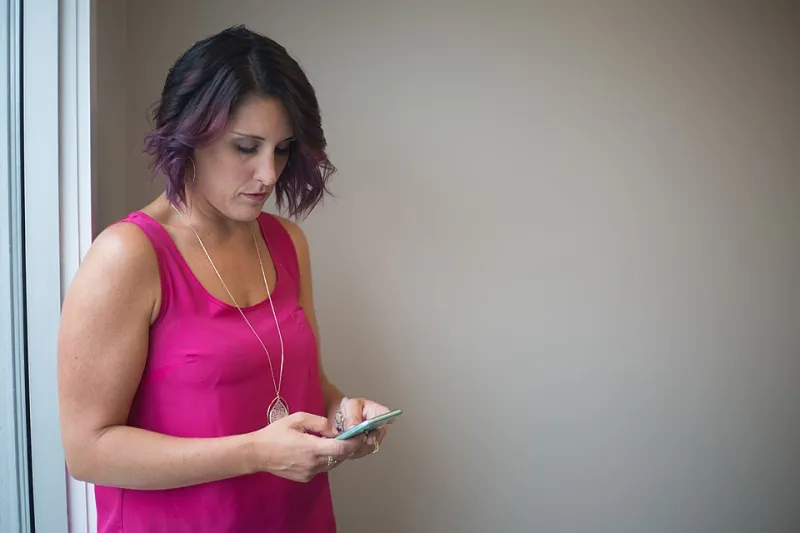
Photo: Kristin Hardwick, CC0, via Wikimedia Commons
There's a specific flavor of dread that shows up roughly eleven seconds after you hit send on a flirty message. The little rush, then the drop. Did that land okay? Did they screenshot it? Is my face in that photo? Did I just tell a near-stranger something I would not repeat to my dentist?
That drop is real, and it's not a sign you're doing something wrong. It's a sign you're doing something intimate without a plan. Here's the plan.
Consent Doesn't End When the Chat Starts
A lot of people treat consent like a door you walk through once. In messaging, it's more like a dial that gets adjusted. Someone saying "I'm into this" on Tuesday doesn't automatically cover Friday, and a green light for words is not a green light for photos.
The low-effort version: ask before you escalate. Not in a legal-document way — in a "you good if I send something" way. That single question does two things at once. It protects the other person, and it quietly tells them you're someone who checks. Both are attractive.
There's also a second layer of consent people skip: the consent to be perceived. Sending someone a photo means handing them an image of you that exists outside your control. So before anything leaves your outbox, ask whether you'd be fine with that image existing in someone else's camera roll.
Screenshot Culture Is Real — So Plan Around It
Assume everything you send could be forwarded. Not because everyone is a villain, but because that's the honest architecture of a phone. Screenshots are frictionless, and a message that was meant as a private joke can become a group-chat screensaver in under a minute.
That doesn't mean you go paranoid and cold. It means you decide what's shareable before you hit send, not after. A useful gut-check: would you be genuinely wrecked if this ended up in front of a room? If yes, that's your signal to change the content, not to kill the flirtation. You can be just as hot with words, angles, and suggestion — and a lot of people find the restraint hotter anyway.
Flip the assumption too. Treat whatever gets sent to you as something you were trusted with. Forwarding isn't a flex; it's the fastest way to get blocked by everyone who hears about it.
Privacy Hygiene: The Unglamorous Stuff That Saves You
Now the boring part, which is also the part that keeps the fun sustainable.
- Separate your identities where it makes sense. A handle that isn't your full name, an email that isn't your work one, and no cross-posting to your public grid.
- Scrub your photos. Mirror selfies with a diplomas, mail, badge, or street sign in the background are a résumé. So is anything shot in the in-app camera vs. the camera roll — in-app is safer because it strips metadata.
- Kill location data. Turn off precise location for social apps. Don't narrate your neighborhood in real time.
- Never send payment info, IDs, or codes. No exceptions, no matter how charming the reason is.
- Lock your phone like it matters. Because it does. Face ID, a short auto-lock, and a notification setting that doesn't display message previews on your lock screen.
- Treat your screenshots folder as evidence. If you save things, save them somewhere you'd be comfortable explaining.
None of this is about living in fear. It's about removing the background hum of anxiety so you can actually be present in the conversation.
Boundaries You Can Send in One Line
Boundaries get a reputation for being heavy. In chat, they can be three words. Try these templates and adjust the tone to sound like a human:
- "I'm into this, but I don't send photos. Words only."
- "I'm offline after 10 — pick it up tomorrow?"
- "Let's keep this here for a while before we move it anywhere else."
- "That's a no for me, but here's what I'd rather do."
Notice that most of them pair the limit with a redirect. A boundary that ends with an open door keeps the energy moving instead of dead-stopping the chat.
When the Vibe Shifts: Exits That Don't Need a Speech
Sometimes it's not about boundaries — it's about the whole thing curdling. Someone gets pushy. Someone ignores a no. Someone sends something you didn't ask for and follows it with "just kidding."
You don't owe anyone a hearing. You do owe basic courtesy exactly once: "Hey, I'm going to tap out of this one — thanks for the fun." Then mute, archive, or block as needed. No justification, no debate, no second round of explanation. The point of a safety net is that you can leave without a fall.
The Spark Survives Structure
Here's the counterintuitive part. People who are clearest about their edges tend to be the ones having the most fun. Limits don't shrink the room — they define it, and a defined space is one you can actually relax in. Consent, privacy, and exit lines aren't the tax you pay on flirting. They're what lets you stop bracing and start playing.
So keep the late-night messages, the teasing, the build-up. Just build the net underneath. Dread is not the price of admission, and you shouldn't pay it.